
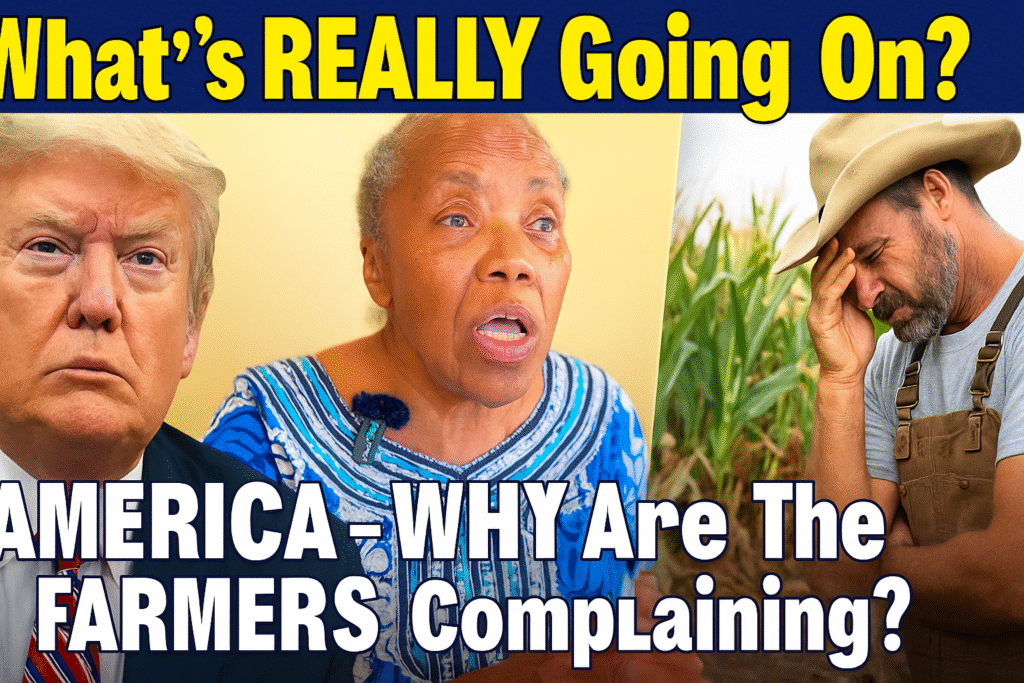
Across the American heartland, the fields are not singing—they’re crying.
Farmers, once called the backbone of the United States, are now facing collapse. Tractors stand idle. Silos are empty. Families who have worked the same land for generations are wondering if they will be the last to hold the keys to their barns.
Why are America’s farmers complaining so loudly? And what really happened in the years that turned agricultural pride into economic pain?
🚜 The Farmers’ Cries – More Than Just Bad Weather
Farmers are not just complaining about a bad season—they are warning about the collapse of rural America. Their struggles come from three main blows:
- Trade Wars That Backfired – Markets they depended on for decades suddenly closed.
- Labor Shortages – The people who planted, harvested, and processed their crops were sent away.
- Rising Costs & Falling Prices – Fertilizer, equipment, and fuel prices went up, while the price they got for their crops went down.
This isn’t about a single year of bad luck. This is systemic failure.
💣 What Really Happened – The Trade War Effect
In 2018 and 2019, under Donald Trump’s presidency, the United States entered a trade war—especially with China, one of its biggest buyers of soybeans, pork, and other agricultural goods.
- China responded by slapping tariffs on U.S. farm products.
- American soybeans rotted in storage because Chinese buyers went elsewhere—Brazil, Argentina, and other countries quickly replaced the U.S. as suppliers.
- Farmers lost billions. The government sent out aid checks, but it wasn’t enough to replace lost markets.
Trade wars are often sold as patriotic battles—but when the dust settles, it’s usually the small businesses and farmers who take the hit.
🛑 Sending Foreign Workers Home – The Labor Collapse
Another major decision was the tightening of immigration policies. Under Trump, many temporary work visa programs for agricultural labor were cut back or slowed down.
Thousands of migrant farmworkers—many from Mexico, Central America, and the Caribbean—were sent home or unable to return.
The result?
- Fruit rotted in orchards because there weren’t enough hands to pick it.
- Dairy farms struggled because trained workers were gone.
- Farmers who relied on seasonal labor couldn’t plant or harvest on time.
In short—no workers, no harvest.
📉 How This Affected America Beyond the Farms
The damage didn’t stop at the farm gate:
- Food Prices Increased – Shortages in supply pushed prices up for everyone.
- Export Reputation Damaged – Countries found new suppliers and now see America as an unreliable trade partner.
- Rural Communities Collapsed – As farms failed, small-town businesses closed.
- Global Competition Rose – While America fought trade wars, competitors built stronger ties and larger markets.
In trying to “win” against foreign competitors, the U.S. lost ground it may never regain.
🛠️ Solutions – How to Fix the Crisis
If America truly wants to save its farmers and food security, it needs bold, immediate action:
- Repair Trade Relationships
- Negotiate fair trade agreements that restore access to global markets, especially with Asia.
- Diversify export markets to reduce dependence on a single buyer.
- Reform Agricultural Labor Policy
- Expand and streamline temporary work visa programs for farmworkers.
- Protect migrant workers’ rights while ensuring farmers have the labor they need.
- Invest in Rural America
- Offer low-interest loans and grants for small farms.
- Build infrastructure—better roads, broadband internet, and storage facilities.
- Encourage Sustainable Farming
- Support farmers in shifting to more resilient crops and regenerative practices.
- Provide incentives for local food systems that keep money in communities.
- Protect Against Future Shocks
- Create a national food security plan to shield farmers from sudden policy shifts.
- Strengthen farmer cooperatives to give them more bargaining power in markets.
🌱 Final Word
The farmers’ cries are not just about their own survival—they are a warning for the entire nation. A country that cannot feed itself cannot call itself strong. Policies made in the name of “winning” have, in reality, left America weaker, more divided, and less secure.
To truly honor the backbone of America, leaders must listen—not just in election years, but in every season. Because if the fields go silent, the whole nation will feel the hunger.
#FarmersFirst | #TradeJustice | #MamaAfricaSpeaks