
By Mama Africa Speaks
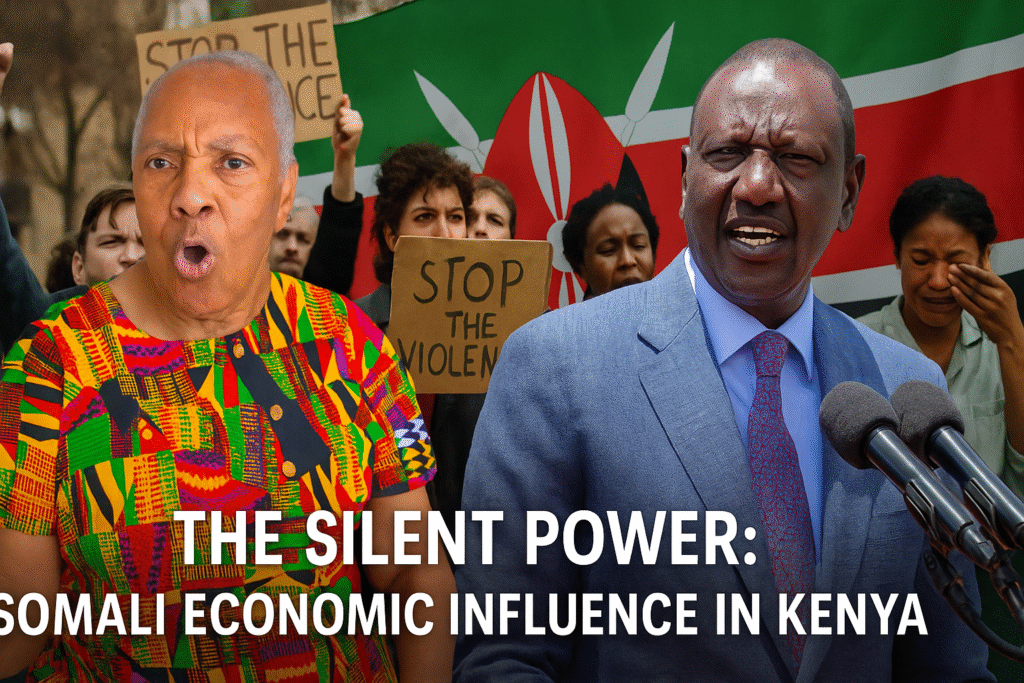
In the heart of East Africa, where trade winds blow across deserts and urban skylines, a quiet yet powerful economic force has reshaped cities, disrupted stereotypes, and built an empire of resilience. This force is the Somali community — often misunderstood, occasionally maligned, but undeniably impactful in shaping the economic fabric of Kenya.
While the national spotlight frequently centers on traditional elite dynasties, political alliances, and foreign debt, it’s time we give due recognition to the Somali people of Kenya — not as outsiders, but as a core part of the country’s economic engine, cultural tapestry, and political future.
A Community Rooted in Trade and Tenacity
The Somali influence in Kenya is not new. For centuries, Somali traders moved with caravans, camels, and coastal winds — linking the interior of Africa to the Swahili Coast, the Arabian Peninsula, and beyond. In modern Kenya, this legacy continues through the bustling commercial streets of Eastleigh in Nairobi — dubbed by many as “Kenya’s Dubai.”
From small textile shops to large import-export operations, Somali entrepreneurs have transformed Eastleigh into a multibillion-shilling trading hub. Goods flow in from Dubai, China, Turkey, and Pakistan — and out to Uganda, Ethiopia, Somalia, and South Sudan. These businesses are fast, cash-driven, community-centered, and built on the age-old principle of trust.
Unlike corporate giants that rely on boardrooms and bureaucracy, Somali business networks rely on honor, kinship, and Hawala — an ancient, informal money transfer system that links Kenya to a vast Somali diaspora in Europe, the U.S., and the Gulf States.
Beyond Eastleigh: Real Estate, Logistics, and Connectivity
But Somali influence is not confined to Eastleigh. Across Nairobi and in towns like Garissa, Mandera, and Wajir, Somali investors have carved out impressive footprints in real estate, logistics, and construction. Empty plots have become apartment blocks. Quiet buildings now buzz with retail life.
Their financial strategies are unconventional — often relying on collective investment, diaspora remittances, and lightning-fast decision-making. Where many Kenyan investors wait for approvals and bank loans, Somali traders pool funds overnight and act by morning.
It’s a model that Kenya can learn from — one that emphasizes communal wealth, swift reinvestment, and low reliance on colonial financial structures.
Political Muscle and Strategic Positioning
Though often painted as marginal or even “foreign,” Somali Kenyans are fully part of the political landscape. They elect members of parliament, senators, and governors across northern Kenya. Figures like Aden Duale (former Majority Leader of Parliament) and the late Yusuf Haji have held influential national positions.
In presidential elections, Somali votes can swing margins in key counties. Their political influence grows not from dominance but from unity — a voting bloc that understands its power and uses it wisely.
Moreover, Kenya’s strategic relationship with Somalia, and its military presence in the region, ties directly to the Somali population within Kenya. Issues of security, trade, and border diplomacy are inseparable from the Somali community’s role in the nation.
Facing Challenges and Misconceptions
Despite these contributions, the Somali community in Kenya continues to face profiling, harassment, and systemic exclusion. After terrorist attacks — such as Westgate and Dusit — Somalis have been unfairly stereotyped and targeted in security crackdowns.
Yet this same community is often the first to alert authorities about threats. They are deeply invested in Kenya’s stability, knowing that peace is good for business and for families on both sides of the border.
What the Somali Model Reveals About Kenya’s Future
The Somali success story in Kenya is not just about money — it is about mindset.
- They trust their own.
- They reinvest in their community.
- They trade, not just consume.
- They build quickly.
- They think globally.
If more of Kenya followed this model — investing in local manufacturing, youth enterprise, communal upliftment, and rapid business cycles — the national economy could be transformed from dependency to dynamism.
Conclusion: A Call for Recognition and Respect
At Mama Africa Speaks, we believe in amplifying the often-overlooked voices of this continent. The Somali community in Kenya is one of those voices — not loud in politics, but thunderous in economics.
They remind us that Africa’s wealth does not lie in its aid, but in its people. In resilience. In relationships. In relentless belief in tomorrow.
As Kenya looks toward economic recovery, political reform, and a new generation of leaders, let us not forget those who have already been leading — not with speeches, but with sweat, strategy, and service.
Let us celebrate, learn from, and walk with them. For in their story, we see the future of a stronger Kenya — and a more united Africa.
Written by: Mama Africa Speaks Team
For truth, voice, and the awakening of our people.