
Introduction: The Fire Is Rising
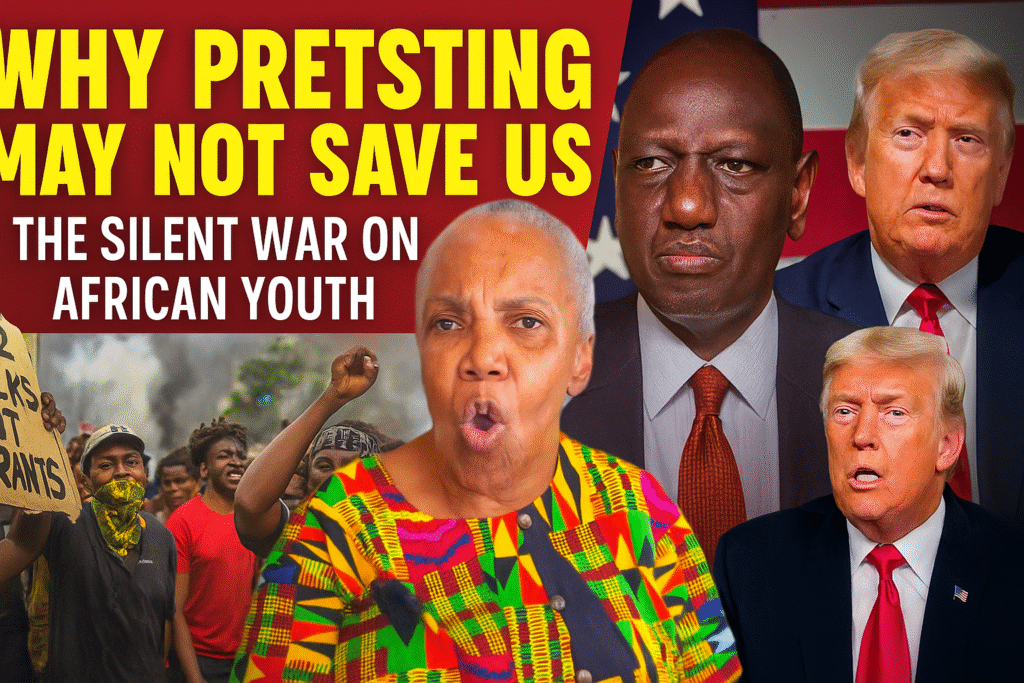
From the streets of Nairobi to the corners of Accra, from Lagos to Johannesburg, a generation is rising. African youth—intelligent, angry, creative, and deeply aware—are marching, posting, tweeting, and protesting. We’ve seen crowds swell with power, voices chant for justice, and hashtags turn into movements.
But despite all this energy, something feels… off.
The system remains untouched.
The puppets stay in power.
The betrayal continues.
And so, we must ask the hard question:
What if protesting isn’t enough? What if the war is deeper, quieter, and more sinister than we think?
The Real Battle Isn’t Always in the Streets
Protests are powerful. They give us unity, visibility, and voice. But the enemies we face have evolved.
Today, they do not always wear military uniforms. They wear suits.
They do not silence you with bullets (not always). They erase you with algorithms, economic policies, and debt traps.
There is a silent war being waged on African youth—a war fought through:
- Economic Sabotage:
High unemployment, rising costs, no capital for entrepreneurship, and constant economic dependency on the West and East. - Educational Miseducation:
Systems that train students to obey, not to lead. Curricula that glorify colonizers while ignoring African thinkers, warriors, and spiritual knowledge. - Cultural Disarmament:
Loss of indigenous languages, identity, and wisdom. Replacement with toxic Western values, celebrity distraction, and Americanized trends. - Digital Control:
Governments shutting down the internet during protests. Social media algorithms muting African voices while boosting distractions and division. - Religious Manipulation:
Fake prophets, corrupted churches, and imported doctrines that encourage submission, not transformation. - Political Puppetry:
Leaders chosen by foreign powers. Elite families playing tribal games while they feed on international aid and IMF loans.
The New Chains Are Invisible
Our grandparents saw the colonial master. We don’t.
Our chains are made of debt, fear, silence, and self-doubt.
We’ve been taught to believe we are free because we can tweet.
We’ve been tricked into thinking we have power because we can protest.
But while we march in the streets, they are selling our land.
While we chant in anger, they are rewriting constitutions in private rooms.
While we die for freedom, they are signing deals with the World Bank.
This is not to say protesting is useless.
But protesting alone is not the revolution.
So What Must We Do?
We must go beyond protests and step into strategy, spiritual depth, and self-sufficiency:
1. Educate Ourselves and Each Other
Real history. Real politics. Real economics. Not what they teach in school—but what our ancestors knew, and what the enemy doesn’t want us to learn.
2. Own Our Economies
Start with small farms, collectives, co-ops, community banks. Stop waiting for government jobs and start building black markets of survival.
3. Decolonize Our Minds
Leave behind colonial religion, colonial education, colonial values. Return to African spirituality, community, and consciousness.
4. Protect Our Digital Spaces
Build platforms. Use encrypted messaging. Learn cyber security. Don’t let them silence our voices online.
5. Build Hidden Networks of Power
The youth must be organized. Not just loud. Structured. Skilled. Focused. With elders who are not traitors—but torchbearers.
Final Word: From Protest to Power
This is not a call to stop resisting.
It is a call to resist more intelligently, more spiritually, more economically.
The future of Africa does not belong to the loudest—it belongs to the most awakened.
Protest if you must. But don’t stop there.
Learn. Organize. Build. Heal.
The war is silent. But so is the revolution.
Mama Africa is speaking. Are you listening?
🟣 Read more at: www.MamaAfricaSpeaks.org
Follow us on IG, TikTok, and YouTube @MamaAfricaSpeaks
If this article moved you—share it.
We don’t need influencers.
We need truth spreaders.