
Across our continent, we are witnessing a dangerous and silent invasion — not through armies, but through business contracts, mining concessions, and foreign investment deals that look good on paper but bleed us dry in reality.
South Africa today makes headlines for violent clashes between locals and other African migrants over small, low-paying jobs — taxi driving, market stalls, construction work. But while we fight one another for crumbs, the real feast is being eaten at the high table — by foreign powers and corporations that come here to get rich, leaving behind poisoned rivers, stripped forests, and communities with nothing to show for it.
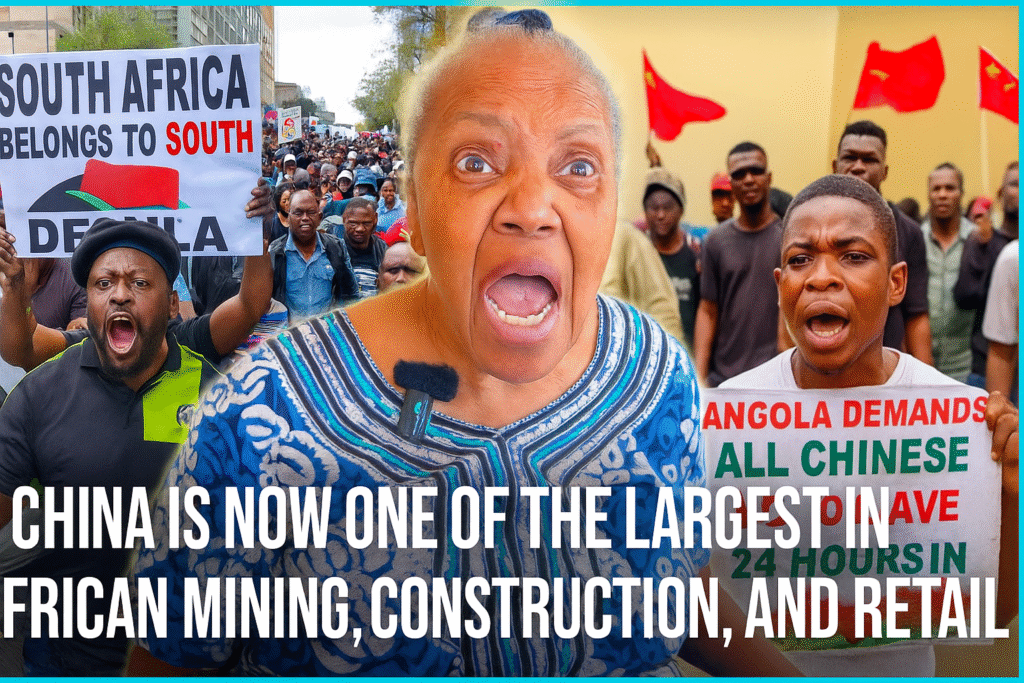
China is now one of the largest players in African mining, construction, and retail. In countries like Mali, Zambia, Ghana, Namibia, Guinea-Bissau, and the Democratic Republic of Congo, Chinese companies are digging deep — into our gold, copper, lithium, and other precious minerals. These resources are shipped overseas to fuel someone else’s industry, someone else’s wealth. And what’s left behind? Scarred land, polluted water, and broken promises.
In Ghana, rivers have turned brown and toxic from illegal gold mining operations. Farmers can no longer use the water for their crops or livestock. In Zambia, a Chinese-owned copper mine’s dam collapsed this year, spilling millions of liters of poisonous waste into the Kafue River — devastating aquatic life and crippling agriculture for millions. In Namibia, a lithium rush has turned into an environmental disaster, with companies accused of fraud, illegal mining, and labor exploitation.
And it’s not only China. Europe and other powers have been doing this for decades. Forests are logged without replanting, fishing waters are overexploited, and fertile land is bought up for foreign agribusiness, pushing local farmers out.
Foreign investors arrive with money, power, and connections. They can import their own workers, set up their own supply chains, and send profits back home. They can bribe officials to look the other way when they cut corners or violate environmental laws. Meanwhile, the African people — the true owners of this land — are left with low-paying jobs, if any at all.
This is not just about economics. This is about sovereignty. Every poisoned river is a blow to our independence. Every forest cleared without thought is an attack on our future. Every mining town left in ruins is a reminder that we are still not in control of our destiny.
If we do not wake up, Africa will be left as a wasteland — rich in resources no more, and rich in spirit no more.
It is time to stop fighting each other for survival while outsiders plunder the very ground we stand on. We must demand that any foreign investment be on our terms, with strict environmental protections, fair wages, and community ownership. We must learn from the past — because we have already lived through centuries of extraction, colonization, and exploitation.
Our land is not for sale. Our water is not for sale. Africa is not for sale.